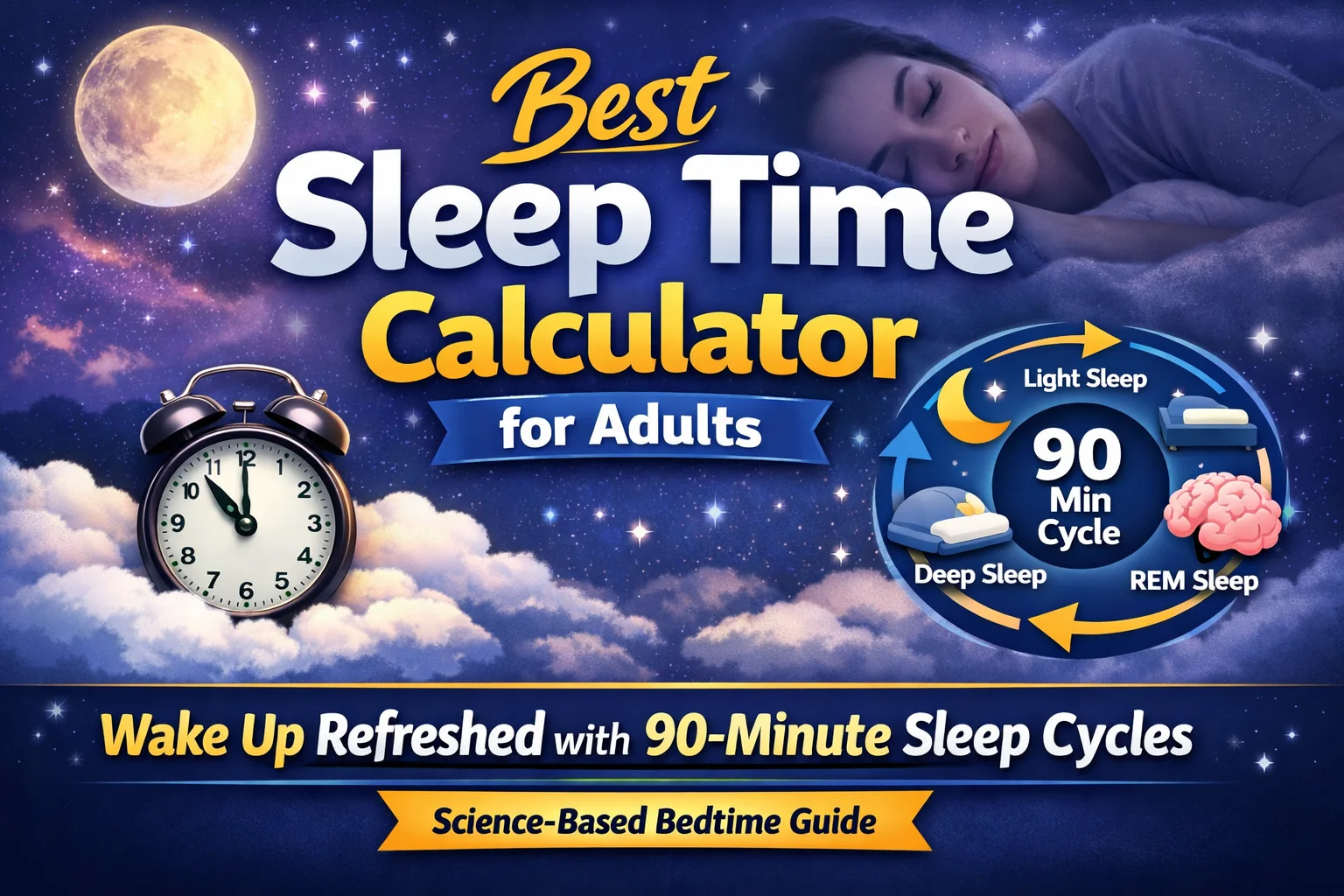
Best Sleep Time Calculator for Adults (90-Min Guide)
Are you waking up tired even after 7–8 hours of sleep? The problem might not be how long you sleep, but when you sleep. Using the best sleep time calculator for adults can help you align your rest with natural sleep cycles and wake up refreshed.
In this complete guide, you’ll learn how a sleep calculator works, why 90-minute sleep cycles matter, and how to calculate your ideal bedtime and wake-up time.
What Is a Sleep Time Calculator?
A sleep time calculator is an online tool that calculates your ideal bedtime or wake-up time based on natural 90-minute sleep cycles.
Instead of just counting 8 hours backward, the best sleep time calculator for adults considers:
- ⏳ 90-minute sleep cycles
- 💤 Time it takes to fall asleep (usually 10–20 minutes)
- 🌙 Deep sleep and REM stages
Waking up at the end of a sleep cycle makes you feel fresh instead of groggy.
Why Adults Need a Sleep Calculator
Adults (18–65 years) generally need:
- 7 to 9 hours of sleep per night
- 4 to 6 complete sleep cycles
If you wake up in the middle of a deep sleep stage, you may feel:
- Tired
- Irritated
- Mentally foggy
- Low energy all day
Using the best sleep time calculator for adults helps you wake up between cycles — not during them.
Understanding the 90-Minute Sleep Cycle
Each sleep cycle lasts about 90 minutes and includes:
- Light sleep
- Deeper sleep
- REM sleep (dreaming stage)
For example:
- 4 cycles = 6 hours
- 5 cycles = 7.5 hours
- 6 cycles = 9 hours
To wake up refreshed, you should aim to wake up after completing full cycles.
Example: Best Sleep Times Based on Wake-Up Time
Let’s say you need to wake up at 6:00 AM.
Counting backward in 90-minute cycles:
- 🕘 9:00 PM (6 cycles – 9 hours)
- 🕥 10:30 PM (5 cycles – 7.5 hours)
- 🕛 12:00 AM (4 cycles – 6 hours)
Add 10–15 minutes to fall asleep.
So ideally, go to bed at:
- 8:45–9:00 PM
- 10:15–10:30 PM
- 11:45–12:00 AM
This method is exactly how the best sleep time calculator for adults works.
Benefits of Using the Best Sleep Time Calculator for Adults
✅ Wake up feeling refreshed
✅ Improve focus and productivity
✅ Reduce morning grogginess
✅ Support mental health
✅ Maintain hormonal balance
✅ Improve overall sleep quality
If you often think, “Why do I wake up tired after 8 hours?”, the issue may be poor sleep timing — not sleep duration.
How to Use a Sleep Calculator Correctly
To get the best results:
- Choose your fixed wake-up time.
- Count backward in 90-minute intervals.
- Add 10–20 minutes to fall asleep.
- Stay consistent every day — even on weekends.
Consistency trains your body clock (circadian rhythm).
Who Should Use a Sleep Time Calculator?
The best sleep time calculator for adults is ideal for:
- Office workers
- Students
- Freelancers working late nights
- Parents with fixed routines
- Anyone struggling with sleep timing
If your schedule changes frequently, using a sleep calculator daily can help stabilize your sleep.
Tips to Improve Sleep Quality
Even with the best sleep time calculator for adults, lifestyle habits matter:
- 📵 Avoid screens 30–60 minutes before bed
- ☕ Avoid caffeine after 2 PM
- 🌡 Keep your bedroom cool and dark
- 🧘 Practice relaxation before sleep
- ⏰ Wake up at the same time daily
Final Thoughts
Getting 8 hours of sleep is not enough — timing matters. The best sleep time calculator for adults helps you align your bedtime with natural sleep cycles so you wake up refreshed and energized.
If you struggle with poor sleep, try adjusting your bedtime using 90-minute cycles for just one week. You’ll likely notice better energy, mood, and focus.
FAQ
What is the best sleep time calculator for adults?
The best sleep time calculator for adults is a tool that calculates your ideal bedtime or wake-up time using 90-minute sleep cycles to help you wake up refreshed.
How many hours should adults sleep?
Most adults need 7–9 hours of sleep per night, which equals 4–6 complete 90-minute sleep cycles.
Is 7 hours of sleep enough?
Yes, 7.5 hours (5 sleep cycles) is ideal for many adults. However, sleep quality and timing matter more than just hours.
How do I calculate my perfect bedtime?
Count backward in 90-minute intervals from your wake-up time and add 10–20 minutes to fall asleep.