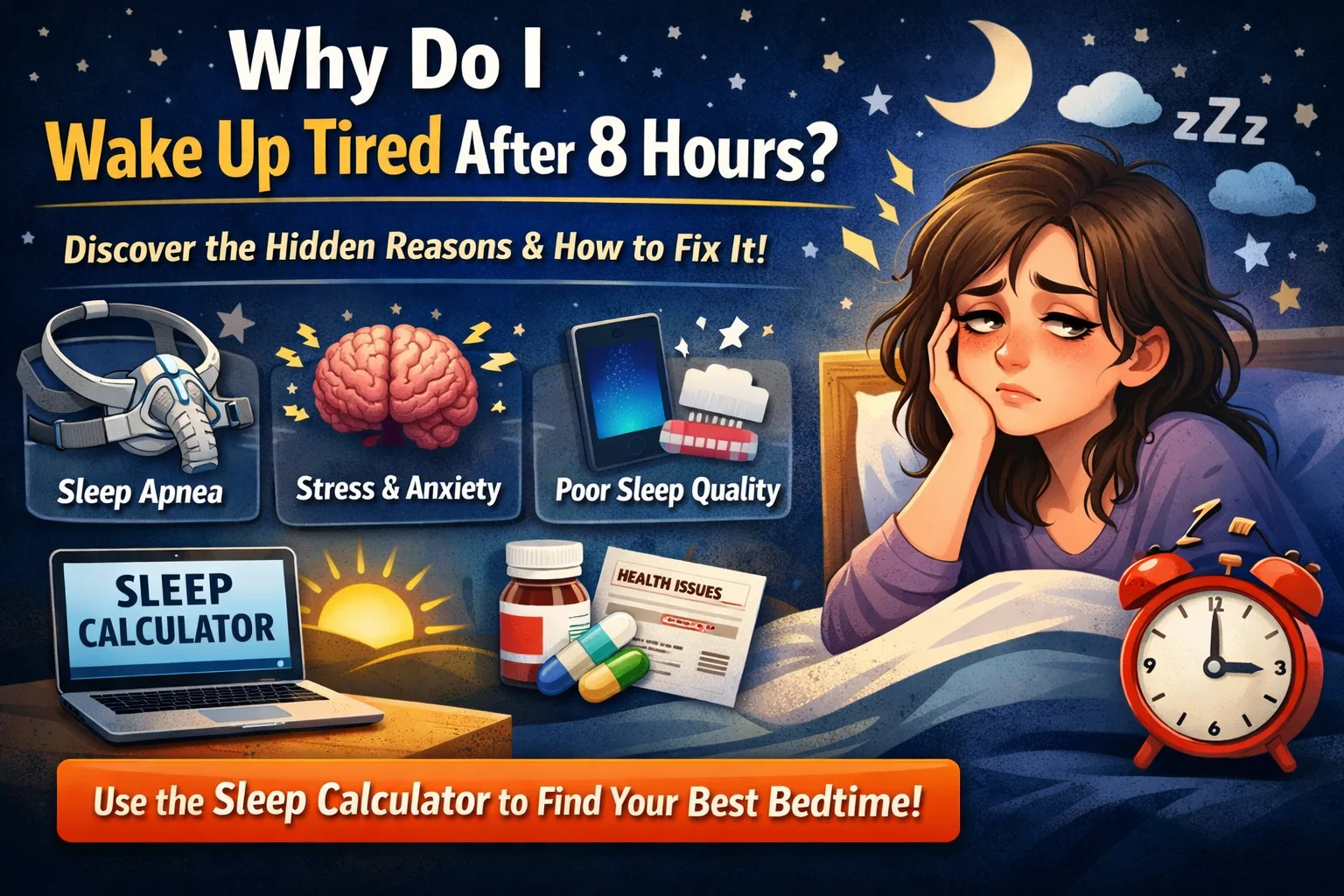
Why Do I Wake Up Tired After 8 Hours
Waking up tired even after 8 hours of sleep can be frustrating. Many people assume that 8 hours of rest guarantees energy, but several factors influence sleep quality. This guide will explain why you might feel exhausted despite getting the recommended amount of sleep and how to fix it.
1. Poor Sleep Quality vs. Quantity
Sleeping for 8 hours doesn’t always mean your body is rested. Sleep quality is just as important as sleep quantity. Interrupted or shallow sleep prevents your body from completing all sleep cycles, particularly deep sleep and REM sleep, which are crucial for physical recovery and mental clarity.
Tips to improve sleep quality:
- Maintain a consistent sleep schedule
- Avoid caffeine and heavy meals before bedtime
- Reduce exposure to blue light from screens
You can use the Sleep Calculator to figure out your optimal sleep and wake times for better energy.
2. Sleep Disorders Could Be the Culprit
Certain sleep disorders make you feel tired even after enough sleep:
- Sleep Apnea: Breathing interruptions disrupt sleep cycles
- Insomnia: Difficulty falling or staying asleep
- Restless Leg Syndrome (RLS): Causes frequent leg movements during sleep
If you suspect a disorder, consult a sleep specialist to get proper treatment.
3. Stress and Mental Fatigue
High stress and anxiety can prevent restorative sleep. Even if you sleep 8 hours, your brain may not reach the deep relaxation needed for energy restoration.
Solutions for stress-related sleep fatigue:
- Meditation or deep breathing exercises
- Journaling before bedtime
- Light evening stretches
4. Poor Sleep Environment
A noisy, bright, or uncomfortable bedroom can prevent deep sleep. Ensure your room is:
- Dark and quiet
- Cool, ideally between 60–67°F (15–19°C)
- Equipped with a comfortable mattress and pillow
5. Lifestyle and Diet Factors
Your daily habits affect sleep:
- Irregular meal times or eating heavy meals late
- Lack of physical activity
- Excessive alcohol consumption
Eating a balanced diet, exercising regularly, and limiting alcohol can boost your sleep energy.
6. Circadian Rhythm Misalignment
Your body’s internal clock may be out of sync with your sleep schedule. Factors like late-night screen use, irregular bedtimes, or travel can misalign your circadian rhythm, leading to fatigue despite sufficient sleep.
Fixing your rhythm:
- Wake up and sleep at the same time daily
- Get natural sunlight in the morning
- Avoid bright screens 1 hour before bed
7. Underlying Health Conditions
Sometimes fatigue is caused by health issues such as:
- Thyroid disorders
- Diabetes
- Anemia
- Vitamin D or B12 deficiency
If lifestyle changes don’t help, consult a doctor to rule out medical causes.
Key Takeaways
- Sleep quality matters more than just quantity
- Stress, diet, and lifestyle strongly affect morning energy
- Use the Sleep Calculator to optimize your bedtime and wake-up times
- Consult a doctor if fatigue persists despite 8 hours of sleep
Feeling tired after 8 hours isn’t normal—identifying the root cause can dramatically improve your energy and productivity.